

Why It’s Time to Rethink SOC 2 in Third-Party Risk Management
SOC 2 was once a trusted signal of vendor security. Today, it is no longer sufficient for modern third-party risk management (TPRM).
As cyber threats escalate and third-party ecosystems expand, organizations are recognizing a critical gap between what SOC 2 claims to provide and the level of assurance security leaders actually need. Inconsistent audits, vendor-defined scope, and a lack of standardized controls have turned SOC 2 into a baseline requirement.
The Problem with SOC 2 in Third-Party Risk Management
Third-party risk management (TPRM) is the process of identifying, assessing, and mitigating risks introduced by vendors, suppliers, and partners. SOC 2 was not designed to support the complexity of today’s risk accountability.
SOC 2 allows vendors to define the scope of their assessments, which often results in critical security areas being excluded. Reports frequently lack prescriptive control requirements, standardized testing, and visibility into remediation. As a result, organizations struggle to understand what was tested, how well controls are implemented, and how one vendor’s risk compares to another’s.

Why SOC 2 No Longer Aligns with Today’s Threat Landscape
Modern cyber risk is dynamic, evolving, and increasingly driven by third parties. Annual, static audits are no longer sufficient. SOC 2 does not adapt to emerging threats, does not ensure consistent evaluation, and does not provide measurable assurance that risk is being reduced.
For organizations managing dozens or thousands of vendors, this model is unsustainable.
SOC 2 allows vendors to define the scope of their assessments, which often results in critical security areas being excluded. Reports frequently lack prescriptive control requirements, standardized testing, and visibility into remediation. As a result, organizations struggle to understand what was tested, how well controls are implemented, and how one vendor’s risk compares to another’s.
HITRUST: A Better Model for Vendor Assurance
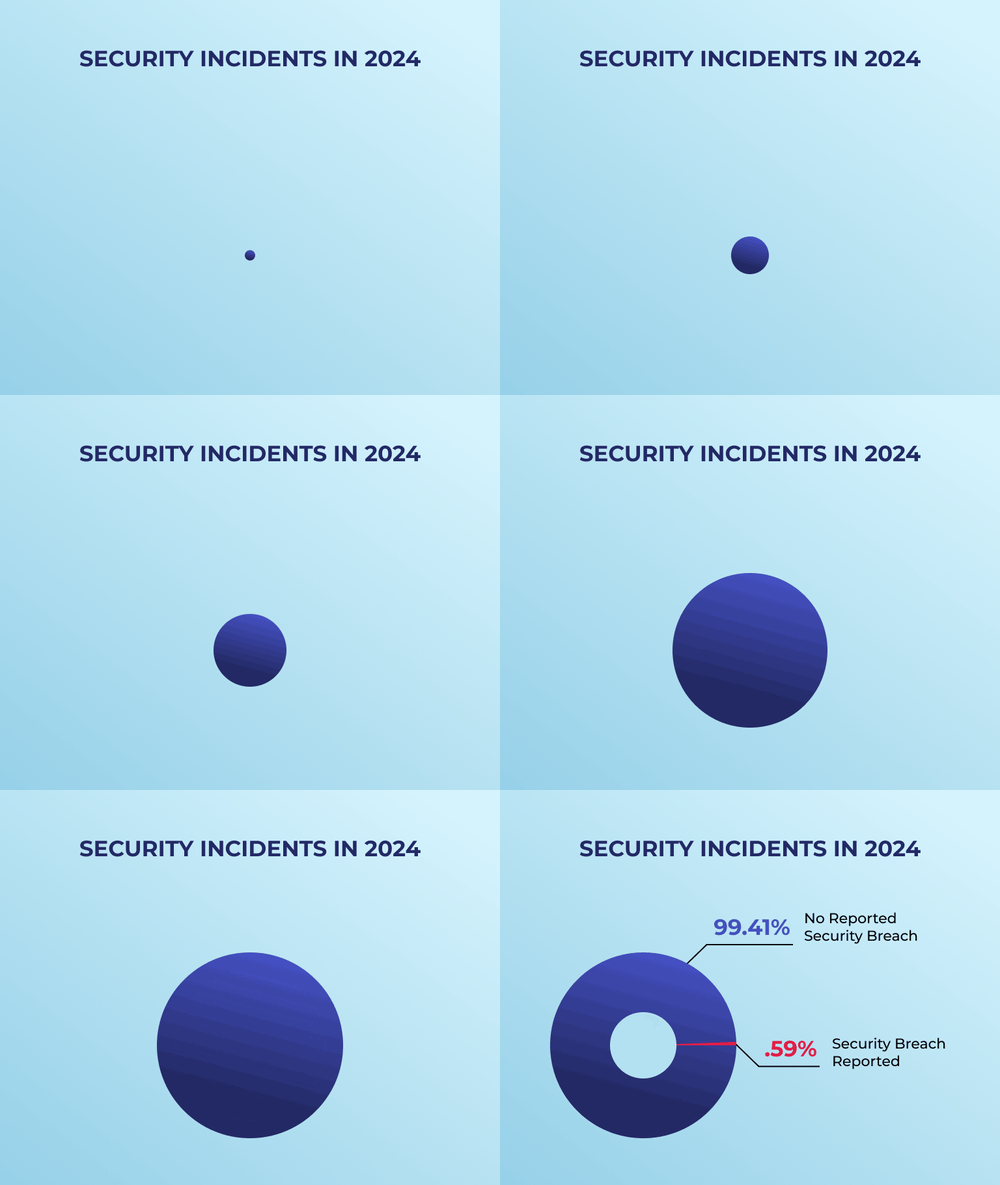
HITRUST certification delivers what SOC 2 cannot: standardized, prescriptive, and threat-adaptive assurance for third-party risk management.
The HITRUST framework aligns with more than 60 security, privacy, and regulatory standards and leverages current threat intelligence to continuously evolve its control requirements. Assessments follow consistent methodologies, enabling meaningful comparison across vendors and clear visibility into risk posture and remediation.
HITRUST also offers scalable certification options based on vendor risk and integrates with platforms like ServiceNow to streamline workflows and reduce manual effort. With 99.41% of HITRUST-certified environments remaining breach-free in 2024, HITRUST is the only assurance mechanism proven to reduce risk.
What Security Leaders Should Do Now
Organizations should reevaluate SOC 2 as a default requirement, educate internal teams and vendors on its limitations, and adopt a tiered, risk-based approach to vendor assurance. Requiring HITRUST certification enables security leaders to move beyond checkbox compliance and build a resilient, scalable TPRM program.
HITRUST is the gold standard for organizations seeking to reduce third-party risk, strengthen trust, and ensure security keeps pace with modern threats.
Read the Full eBook: Why It’s Time to Rethink SOC 2 in Third-Party Risk Management
Explore:
• Why SOC 2 no longer delivers meaningful assurance in TPRM
• How vendor-defined scope and inconsistent audits increase risk
• What threat-adaptive, standardized assurance looks like in practice
• How HITRUST assessments help organizations reduce risk at scale
Whether you’re evaluating vendors, modernizing your TPRM program, or redefining assurance requirements, this eBook offers actionable insights to support informed decision-making.